City of Toronto · February 2026
"Better My City" Wins 2nd Place at the City of Toronto Open Data Awards (2025–2026)
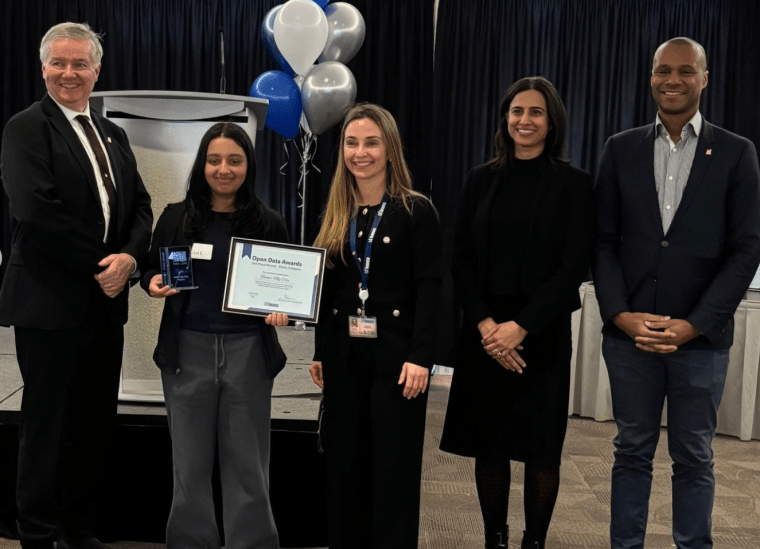
Better My City, my AI-powered civic issues reporting platform for school students, has been awarded 2nd Place in the Public Projects category at the City of Toronto Open Data Awards (2025–2026).
The annual Open Data Awards recognize projects that use Toronto's open datasets to generate measurable public impact. This year, 45 submissions were reviewed by an expert panel of municipal leaders, city staff, civic technologists, AI engineers, and academics. Projects were evaluated based on public impact, innovation, and user-centricity.
The Better My City app was recognized for its innovative merging of AI with open datasets and the mobile usage patterns of school students to automate and enhance 311 reporting. The 2026 Awards Gala Ceremony, bringing together the winners, was held at Metro Hall, Toronto, on 11 February 2026. As a winner, I delivered a presentation about my app, how it was used by students, the open datasets it leveraged, and how it made the city better.
The Problem: Students Experience the City Daily, But Civic Engagement is Weak
Toronto has over 100,000 high-school students, and they are one of the biggest daily users of public infrastructure. Students walk, bike, and take transit to school and after-school activities along fixed routes every day. They navigate construction sites, encounter unsafe street crossings, speeding cars, and accessibility gaps in real time. Leaving for school early in the morning, they are often the first to notice:
- Faded crosswalks
- Vandalized bus stops
- Malfunctioning walk signals
- Overflowing trash bins
- Icy sidewalks
- Obstructed accessibility paths
These issues make the school commute less safe and less pleasant than it should be. Yet few students report them, because civic reporting systems like 311 Toronto do not speak the language of youth - they require adult-level familiarity with government systems, municipal terminology, correct dropdown categories, and detailed text-based forms. The result is a civic participation gap: youth experience infrastructure failures firsthand but lack student-friendly tools to make a difference.
The Opportunity: Transforming Mobile Photographs into Civic Signals using AI
Most students carry mobile phones and constantly document their daily lives. They are fluent in social media and increasingly comfortable using AI tools. I wanted to redirect that instinct for documentation and hyperlocal observation toward civic improvement - transforming the simple act of snapping a photo into structured civic input on 311 Toronto.
The Solution: Images and AI-Assisted Civic Reporting
Better My City is a Flutter-based mobile application designed to make municipal systems speak the language of youth. When a student encounters a civic issue, they simply point and take a photograph. The app uses:
- Device GPS and EXIF metadata to determine precise location
- Reverse geocoding to confirm street-level context
- The Gemini Vision API for multimodal image classification
- Patterns from Toronto's 311 Service Requests dataset to align reporting categories
- The City's open ward dataset to map ward boundaries
Within seconds, the app generates a structured draft complaint aligned with municipal reporting standards - complete with date, ward number, and hashtags. Students can submit the report (which is then tweeted to 311 Toronto), copy and send it themselves, view the issue on a live crowdmap, and track ward-level issue clusters. By automating classification, geolocation, and form-filling, Better My City almost gamifies youth participation - turning everyday observations into measurable public impact.
Real Impact: What Has Been "Made Better"?
To date, the platform has facilitated 75+ student-generated reports across multiple wards in Toronto. Outcomes from the Made Better section of the app include:
- Obstructed walk signals cleared within 24 hours
- Overflowing garbage bins addressed after student submissions
- Faded crosswalk markings repainted
- Missing park benches replaced following sustained reporting
- School-zone safety concerns escalated into formal review pipelines
- Icy sidewalk hazards and bike-lane debris cleared more rapidly after student documentation
Students can now submit a structured report in under 60 seconds using a single photo - compared to several minutes navigating traditional 311 forms. The difference is not just speed; it is empowerment. Students have connected with ward councillors, attended public consultations, visited City Hall, and delivered deputations - experiencing firsthand how municipal systems respond to student input and collective voices.
Why This Matters
Open data is powerful. When merged with AI and aligned with mobile-phone usage patterns, it becomes a tool for public good - enabling students to engage with their city and make it better for everyone. Better My City demonstrates that civic participation does not need to wait for voting age. Students who interact with the city before 18 are more likely to become committed voters, city builders, informed citizens, and strong leaders.
Province of Ontario · March 2026
From Planetary Defense to Civic Action: Receiving the Youth Leader Award 2026
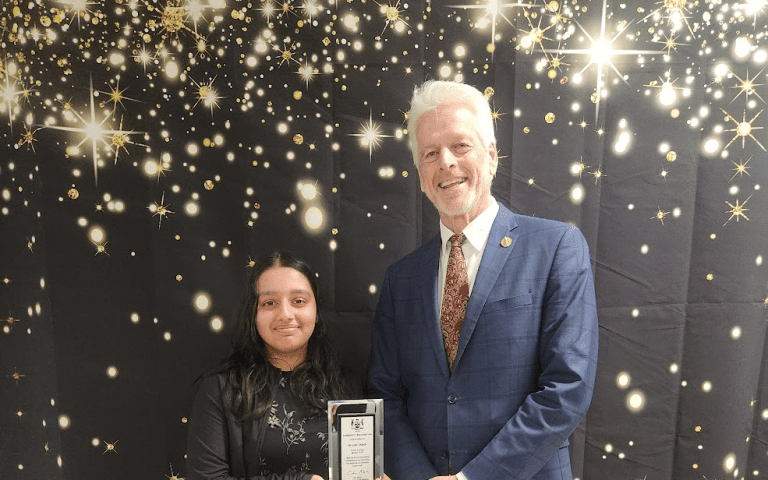
March 7, 2026, was a special day for me. I received the Youth Leader Award at the 6th Annual Community Recognition Ceremony organized by Member of Provincial Parliament Chris Glover for the Spadina–Fort York riding. Being recognized alongside 12 other community builders from my riding was meaningful in at least two ways.
First, it strengthened my belief that we all have civic and social responsibilities in our everyday lives to improve our community - including high school students like me who may be too young to vote. Second, I enjoyed these responsibilities because they aligned with my personal passion for the night sky.
As a child, I spent countless Saturday mornings at the Ontario Science Centre, participated in space hackathons, attended guest lectures at the University of Toronto, and peered through telescopes at skywatch parties with the Royal Astronomical Society of Canada. I remember asking a lot of questions that usually began with "Why?" Over the years, I built rovers, robots, and model rockets for school projects, taught myself Python, and showcased my work at street festivals, science marches, and in libraries.
In 2020, the doors of my school closed for the COVID-19 lockdown for a year and a half, but windows of online learning opened. Many space talks and conferences switched to Zoom, making them easier and free to attend. At the Planetary Defense Conference, I heard about the NASA DART Mission, where a spacecraft would be used to deflect an asteroid as a test for planetary defense. Scientists were calling on astronomers around the world to collect data to improve the baseline measurements. I found the call fascinating because it brought together robotics, astronomy, and the responsibility of scientists to protect Earth.
I began to wonder: could I, as a student, also contribute? I started getting familiar with open datasets from NASA and ESA and writing to scientists and astronomers about how to access telescopes. I filled out forms and wrote project proposals to gain time on a network of robotic telescopes across Australia, Canada, Chile, Spain, and the USA. By joining open communities, I developed my own open-source tools to find unknown asteroids and determine their physical properties. I gathered 72 hours of astronomy data on Didymos before, during, and after the impact, and measured the effect of NASA's DART mission on the Dimorphos asteroid system. That work earned me the Best Project Award at the Canada-Wide Science Fair in both 2022 and 2023 - the first back-to-back winner since 1989–90 and the youngest ever - and Second Prize at the European Union Contest for Young Scientists in Brussels, with sole-authored peer-reviewed research published in Acta Astronautica at age 15.
What I learned was simple: you can do meaningful work at any age, and the simplest way is to just start. The same turned out to be true for civic life. You don't need to wait until you are of voting age to have a voice in your neighbourhood, your city, or your province.
So I started showing up. I campaigned during municipal and provincial elections for representatives whose values matched my own. I served as a Legislative Page at the Ontario Legislature. I deputed at City Hall on transit reliability, the city budget, and RapidTO bus priority lanes, and took on a leadership role as Toronto Lead for More Transit Southern Ontario. I spoke at rallies at Queen's Park opposing the closure of the Ontario Science Centre, the destruction of the urban forest at Ontario Place, and cuts to education funding. I published letters to the editor in the Toronto Star on road safety, green space, and equitable public investment, and gave interviews with CBC, CTV, and CityNews.
The more I showed up, the more I saw the same problem - data existed, but it wasn't accessible to young people. That led me to build the BetterMyCity.com app using the same principles of open data and civic technology that shaped my planetary-defense work, but directed at my own city. The platform has helped generate over 75 reports across Toronto, won top prize at the City of Toronto's PROGRAM:TO Hackathon, and earned 2nd Place at the City of Toronto Open Data Awards.
None of this happened in a single moment. It has been years of showing up - at City Hall, at Queen's Park, at rallies, volunteering with local organizations, and doing campaigning and street outreach. This award affirms what I have believed since those early mornings at the Science Centre: that curiosity, open data, and persistence can make things better - on a planetary scale, and on ours. Thank you to MPP Glover, to the Spadina–Fort York community, and to everyone who has supported this work. I'm just getting started.
Ward 10, City of Toronto · 2026
Public Spaces Champion (MVP) - recognized by Councillor Ausma Malik
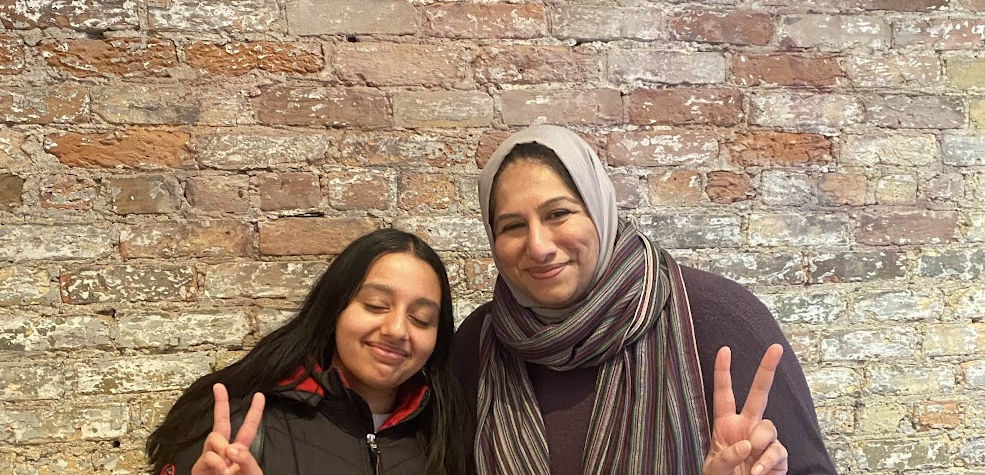
Councillor Ausma Malik (Ward 10, Spadina–Fort York) named me a Public Spaces Champion - MVP in her 2026 Champions list, recognizing my work to make streets and shared public spaces safer and more accessible.
The recognition highlights work that runs through this whole site: award-winning science projects, deputations at City Hall, and community organizing - including volunteering with TTC Riders - to make public spaces safer and more accessible for everyone.
Read the Councillor's 2026 Champions announcement here: ausmamalik.ca/2026champions →